

%201.png)
Sign up for updates
BUSINESS WIRELESS IS
ABOUT TO CHANGE FOREVER.
ABOUT TO CHANGE FOREVER.
Stay up to date with 46 Labs for the entire journey.
Secure Voice Infrastructure for Enterprise and Carrier Networks
Feature-rich.
Fast.
Reliable.
SECURE.
Fast.
Reliable.
SECURE.
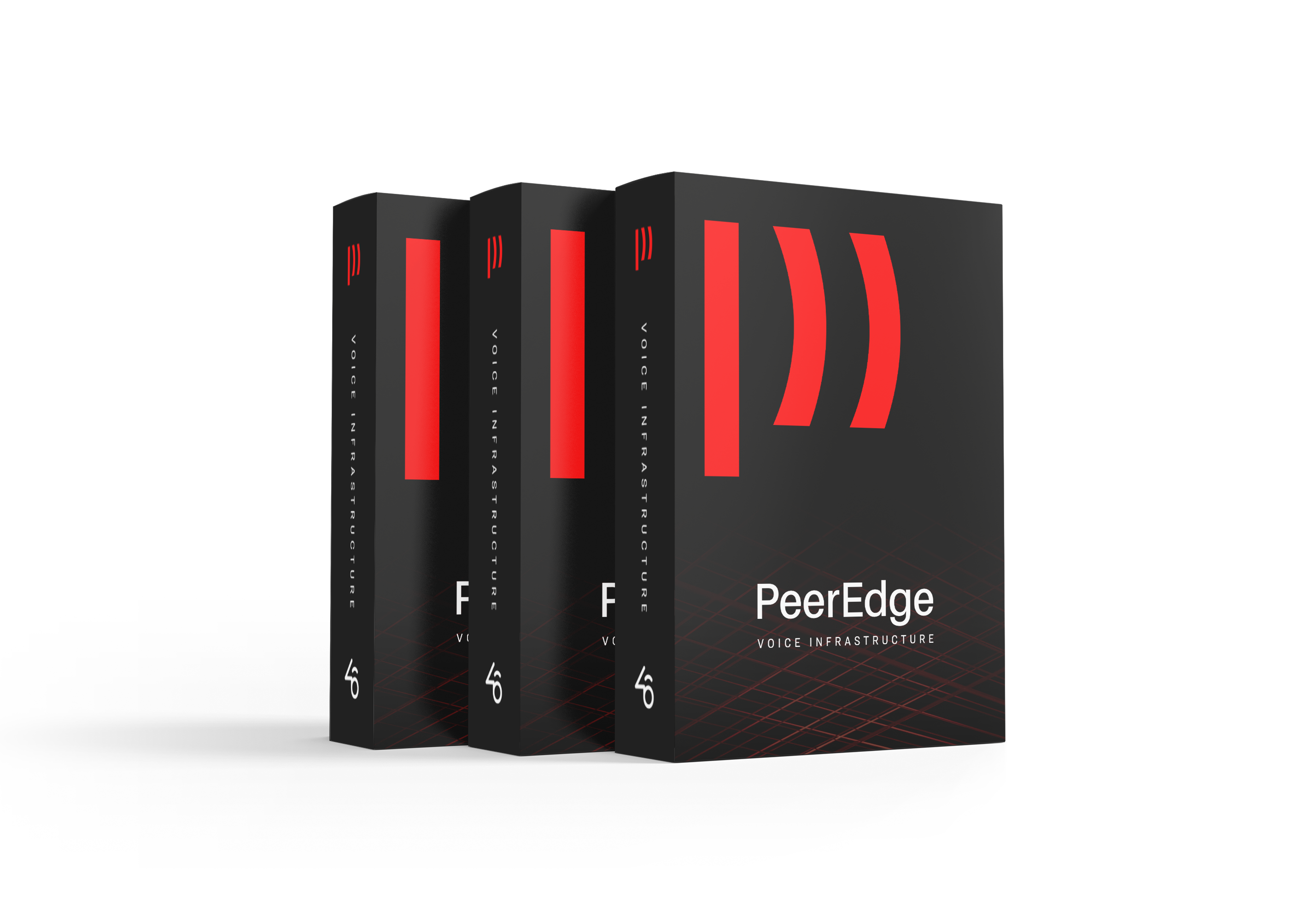
Featuring Operator
AI Assistant.
AI Assistant.
The biggest and most ground-breaking component of PeerEdge Next Generation, our Operator AI Assistant gives you instant, automated power to generate CDR analysis and configure operations.


Security and compliance
built into the carrier layer
built into the carrier layer
STIR/SHAKEN and call authentication
STIR/SHAKEN (Secure Telephone Identity Revisited / Signature-based Handling of Asserted information using toKENs) authenticates caller identity at the carrier level. Under the TRACED Act, all US voice service providers are required to implement it. 46 Labs is fully compliant.
In practice, STIR/SHAKEN cryptographically signs call identity at the originating carrier and passes that signature through the network so terminating carriers can verify it. Calls that arrive without valid attestation are flagged, scored, and handled according to policy, before they reach your enterprise environment.
46 Labs layers reputation management and proactive fraud scoring on top of the compliance baseline. Calls are scored against known fraud patterns, carrier behavioral signals, and volume anomalies in near real time, reducing the operational burden on security teams trying to manage call authentication manually.
In practice, STIR/SHAKEN cryptographically signs call identity at the originating carrier and passes that signature through the network so terminating carriers can verify it. Calls that arrive without valid attestation are flagged, scored, and handled according to policy, before they reach your enterprise environment.
46 Labs layers reputation management and proactive fraud scoring on top of the compliance baseline. Calls are scored against known fraud patterns, carrier behavioral signals, and volume anomalies in near real time, reducing the operational burden on security teams trying to manage call authentication manually.
Encryption at the signaling and media layer
Call signaling on PeerEdge is secured via TLS (Transport Layer Security). Voice media is encrypted with SRTP (Secure Real-Time Transport Protocol). These protections operate at the network layer, independent of what endpoint, softphone, or UC platform sits on top, which means security is not broken by a device upgrade or a platform migration.
Network resiliency as a security control
A platform that goes offline under a TDoS (Telephony Denial of Service) attack has failed both availability and security simultaneously. PeerEdge is built on cloud-native architecture with automated redundancy and failover designed to maintain call continuity under sustained load, including the kind generated by volumetric attacks. The disaster recovery model preserves in-progress calls during local outages, not just restarts service afterward.
What the voice fraud threat profile
actually looks like
actually looks like
Toll fraud via carrier interconnect exploitation is the largest category of telecom fraud globally.
The mechanism is straightforward: fraudsters exploit weaknesses in carrier interconnect agreements to route high call volumes to premium-rate numbers, generating charges that fall to the originating carrier or enterprise before detection occurs.
The threat landscape has expanded beyond toll fraud:
The mechanism is straightforward: fraudsters exploit weaknesses in carrier interconnect agreements to route high call volumes to premium-rate numbers, generating charges that fall to the originating carrier or enterprise before detection occurs.
The threat landscape has expanded beyond toll fraud:
- SIP spoofing alters call headers to mimic legitimate numbers, facilitating fraud and bypassing call blocking systems.oofing manipulates call header information to impersonate legitimate numbers, enabling fraud and bypassing reputation-based call blocking systems.
- Vishing and deepfake voice attacks use AI-generated audio to impersonate executives or vendors. Deepfake fraud attempts rose more than 1,300% in 2024.
- TDoS attacks flood voice infrastructure with call volume designed to exhaust capacity and disrupt operations, a growing vector for ransomware operators targeting VoIP systems.
46 Labs holds NPAC certification, establishing verified carrier identity and accountability under number portability standards, a credential that further reduces exposure to interconnect fraud and number spoofing.
PeerEdge Features Built For
secure, scalable voice
Fraud detection and call authentication
Near real-time call scoring against fraud patterns, carrier behavioral signals, and volume anomalies. Integrated with STIR/SHAKEN attestation for origination-to-termination visibility. Decoupled CDR reporting supports rapid anomaly detection and integration with external analytics platforms.
STIR/SHAKEN compliance
Fully compliant with FCC mandates under the TRACED Act. Call identity signed at origination and verified at termination. Reputation management and proactive fraud flagging applied on top of the compliance baseline.
Automation EnhancementsEncryption (TLS/SRTP)
Call signaling secured via TLS. Voice media encrypted via SRTP. Network-layer protection that operates independently of endpoint or UC platform.
Network resiliency and disaster recovery
Cloud-native survivability with automated failover and in-progress call preservation during outages. Designed for continuity under TDoS conditions. More cost-effective than hardware-based DR without reducing uptime guarantees.
Versatile connectivity
Connects IP PBXs, dialers, and enterprise devices to VoIP networks. Supports on-premises and cloud deployments without requiring hardware changes at the enterprise.
Dashboard and administration
Web-based dashboard for call and configuration management. SaaS-based with single sign-on (SSO) access to the PeerEdge portal. Reduces administrative overhead for teams managing multi-site or multi-carrier environments.
API-first integration
Built with OSS/BSS integration in mind. Standard interfaces support automated data exchanges without custom development, reducing time-to-value for enterprises connecting PeerEdge to existing billing, analytics, or operations systems.
Dynamic resource allocation
Cloud-native architecture enables on-demand capacity scaling with near-zero error rates. Configuration changes take effect in near real time.
Media handling
Replaces the traditional media server model. Voice content handling is consolidated into automated containers, reducing provisioning complexity and per-call latency overhead that accumulates in legacy architectures.
46 Labs support
US-based team in Dallas, Texas. One point of contact for platform, compliance, and operational questions.
Carriers & Enterprises
We Currently Support
We Currently Support

.svg)
.svg)
.svg)

.png)
Works with Teams, SIP trunking, and your existing voice stack
PeerEdge supports Microsoft Teams Direct Routing, enabling organizations already running Teams to use 46 Labs as the underlying carrier without replacing their UC environment. SIP trunking connects to IP PBXs, contact centers, and enterprise telephony infrastructure, on-premises or cloud-hosted.
For carriers, PeerEdge connects to existing interconnect arrangements and can be deployed alongside legacy softswitch infrastructure without requiring a full migration upfront.
For carriers, PeerEdge connects to existing interconnect arrangements and can be deployed alongside legacy softswitch infrastructure without requiring a full migration upfront.
Talk to the 46 Labs team
Enterprise voice infrastructure decisions are hard to reverse. If your current platform has exposure at the carrier layer, through compliance gaps, fraud risk, or resiliency limitations, the right time to address it is before an incident forces the issue.
.svg)
.svg)
(Toll-free)
(Local + International)
© 2024 46 Labs, LLC. All rights reserved.